
VELORIA Nonwoven: An Innovative Wood Pulp Substrate for Wet Wipes
The performance of a wet wipe depends on more than its lotion formula. The substrate also plays an important role in softness, thickness, linting, liquid management and the overall experience of using the product.
For wet wipes manufacturers, choosing the right nonwoven material means balancing product quality, manufacturing requirements and cost efficiency.
VELORIA Nonwoven is a wood pulp and polypropylene (PP) fiber composite substrate developed for wet wipes manufacturers seeking a distinctive combination of softness, loft, wet-wiping performance and material customization.
Produced using a dry-laid air-forming process, VELORIA Nonwoven combines wood pulp and PP fibers to create a fine, lofty material structure. It offers an alternative approach to conventional wet wipe substrates and provides opportunities for product differentiation and total cost optimization.
1. What Is VELORIA Nonwoven?
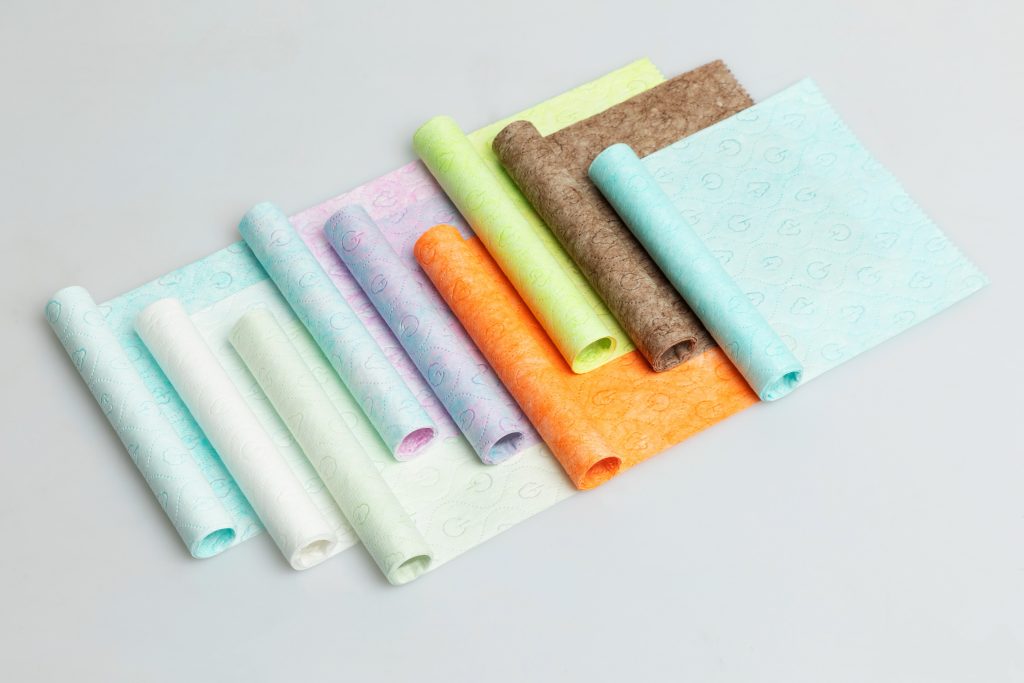
VELORIA Nonwoven is an innovative nonwoven substrate made from wood pulp and polypropylene fibers.
Unlike conventional wet-laid paper materials, its dry-laid manufacturing process uses an air-forming technique to distribute wood pulp and PP fibers into a web structure. The fibers are combined during web formation to create a material designed for softness, bulk and functional wiping performance.
The production technology allows flexibility in material weight, color, surface pattern and product design.
Key characteristics of VELORIA Nonwoven include:
* Wood pulp and PP fiber composition: Combines two different fiber types in a composite structure.
* Dry-laid air-forming technology: Forms the fiber web through an air-based process.
* Fine, lofty structure: Designed to provide a soft touch and a fuller feel.
* Flexible product design: Supports different basis weights, colors and surface patterns.
* Broad basis-weight range: Designed for basis weights from 20 to 200 gsm, depending on the intended product and manufacturing specifications.
These characteristics make VELORIA Nonwoven a material option for wet wipes manufacturers developing products with different performance, positioning and cost requirements.
2. Low Linting During Wet Wiping
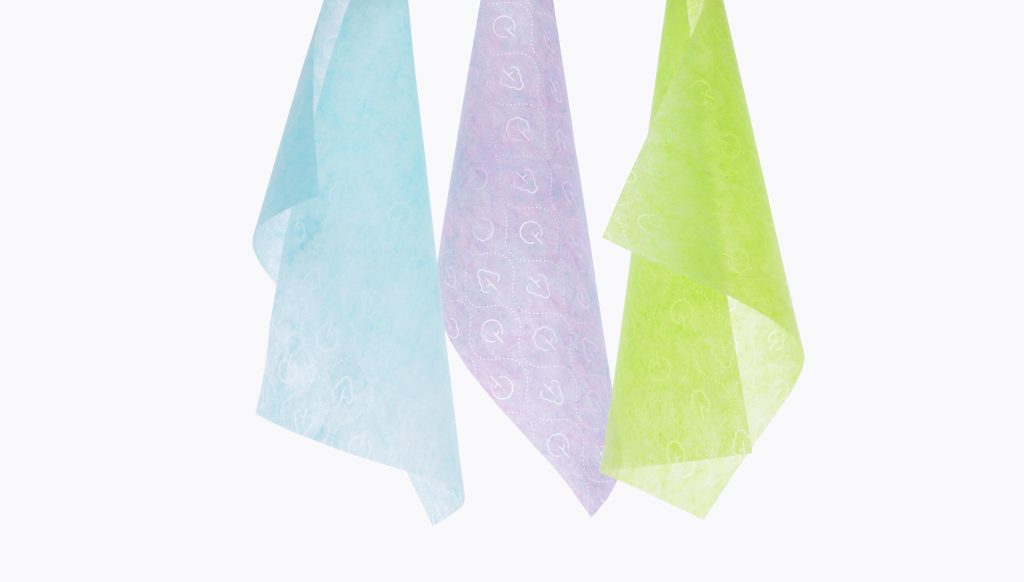
Linting is an important consideration when selecting a substrate for wet wipes.
During wiping, loose fibers or small particles may detach from the material and remain on the surface being cleaned. Excessive linting can affect the perceived cleanliness of the wipe and the consistency of the wiping experience.
VELORIA Nonwoven is designed to provide a fine fiber structure and reduce linting during wet wiping.
In a supplier-reported comparison using materials with a basis weight of 70 gsm, VELORIA Nonwoven was evaluated against a conventional reference material.
The reported results were as follows:
| Test Parameter | VELORIA Nonwoven | Reference Material |
| Dry thickness | 0.901 mm | 0.871 mm |
| Wet thickness | 0.707 mm | 0.606 mm |
| Number of particles released during wet wiping | 9 | 80 |
| Linting coefficient | 4.57 | 5.06 |
| Surface fiber fineness | 2.45 μm | 2.63 μm |
In this comparison, VELORIA Nonwoven released approximately 89% fewer particles during wet wiping than the reference material. Its reported wet thickness was approximately 17% higher.
These results suggest that the material may help manufacturers develop wipes with lower linting and better retention of thickness under wet conditions.
Actual performance depends on the test method, material specifications, converting conditions and finished-product formulation. Manufacturers should conduct comparative testing under their own application conditions before making final material selections.
For wet wipes brands, lower linting can be a useful product-development advantage, particularly when a cleaner and more consistent wiping experience is a priority.
3. A Softer, Fuller and More Cushioned Wipe Experience
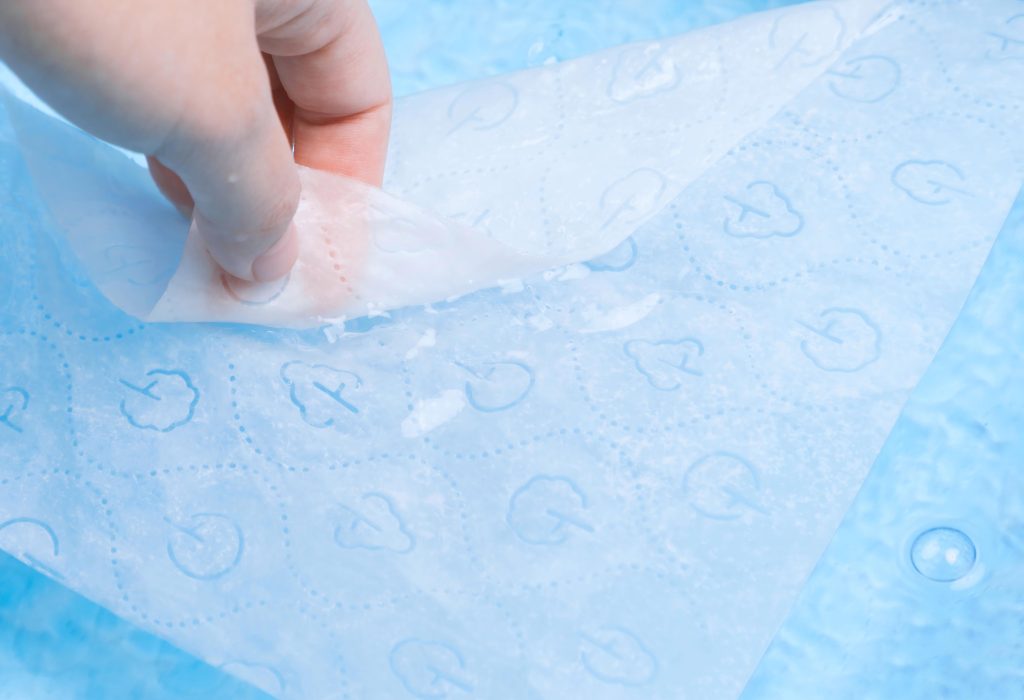
Consumers often judge wet wipes by how they feel during use. A wipe that feels thin, flat or rough may not deliver the experience expected from a premium product.
Material thickness alone does not determine perceived quality. Fiber structure, surface characteristics, wet-state thickness and the interaction between the substrate and lotion all contribute to the overall feel.
VELORIA Nonwoven is designed with a fine, lofty structure to help create a softer and fuller tactile experience.
Its potential advantages include:
* A soft touch for everyday wiping applications.
* A fuller, more cushioned feel compared with flatter substrates.
* Better retention of thickness under wet conditions in the reported comparison.
* Opportunities to create distinctive surface textures through material design.
For manufacturers developing premium baby wipes, personal care wipes and other products where softness matters, these characteristics provide opportunities to differentiate the finished wipe.
The final tactile experience will also depend on the selected basis weight, fiber composition, embossing pattern, lotion formulation and converting process.
4. Opportunities to Optimize the Total Cost per Wipe
For wet wipes manufacturers, purchasing cost is only one part of the total product cost.
The substrate, lotion, converting efficiency, finished-product specifications and packaging requirements can all affect the cost of producing each wipe.
VELORIA Nonwoven provides an opportunity to evaluate cost optimization beyond the price per kilogram of the raw material.
Potential for Lower Substrate Consumption
If the material can deliver the required softness, thickness, wet-wiping performance and strength at a lower basis weight, manufacturers may be able to reduce substrate consumption per wipe.
This possibility should be assessed through product trials rather than assumed from material thickness alone.
Potential for Lotion Optimization
The structure of a wipe substrate affects how liquid is distributed, retained and released during use.
VELORIA Nonwoven may provide opportunities to optimize lotion loading, moisture retention and liquid management in specific formulations.
Supplier-reported development data indicates the potential for reducing lotion dosage by approximately 30% in certain conventional wipe applications. However, this figure should not be treated as a universal result or a guaranteed saving.
The achievable reduction depends on the substrate specification, lotion composition, wipe dimensions, packaging system, required moisture level and consumer-use expectations.
Any lotion reduction should be validated through controlled trials that assess moisture uniformity, storage stability, wiping performance and the condition of the finished product throughout its intended shelf life.
Evaluating the Total Cost
A meaningful cost comparison should consider more than the unit price of the substrate.
Manufacturers may evaluate:
* Substrate cost per finished wipe.
* Lotion consumption per wipe.
* Product thickness and softness at the selected basis weight.
* Material waste and converting efficiency.
* Finished-product performance and consumer acceptance.
* Packaging compatibility and moisture retention during storage.
The objective is to optimize the total cost per wipe while maintaining the required product quality—not simply to purchase a lower-priced raw material.
VELORIA Nonwoven can therefore be evaluated as part of a broader product-development and cost-optimization strategy.
5. Wood Pulp and PP Fibers: A Different Approach to Wipe Substrate Design
Wood pulp and polypropylene fibers have different characteristics. Combining them within one nonwoven structure creates opportunities to develop a substrate with a different balance of bulk, surface feel and liquid-management behavior.
Wood pulp contributes cellulose-based fibers to the composite structure, while PP fibers provide a synthetic fiber component.
The performance of the finished material depends on factors such as fiber specifications, fiber distribution, basis weight and manufacturing conditions.
For wet wipes manufacturers, this composite structure creates opportunities to investigate:
* Liquid absorption and distribution.
* Liquid retention within the wipe structure.
* Surface wetness during and after wiping.
* Oil absorption performance in relevant applications.
* The relationship between material structure and lotion loading.
These are development opportunities rather than guaranteed performance outcomes. Absorption, retention and oil-management performance should be measured using application-specific methods and compared with the manufacturer’s existing substrate.
For brands seeking a differentiated wipe material, VELORIA Nonwoven provides a platform for evaluating these characteristics together rather than focusing on a single material parameter.
6. Custom Colors, Surface Patterns and 3D Designs
Product differentiation is increasingly important in competitive wet wipes markets.
Beyond functional performance, the appearance and tactile characteristics of a wipe can help a brand create a recognizable product identity.
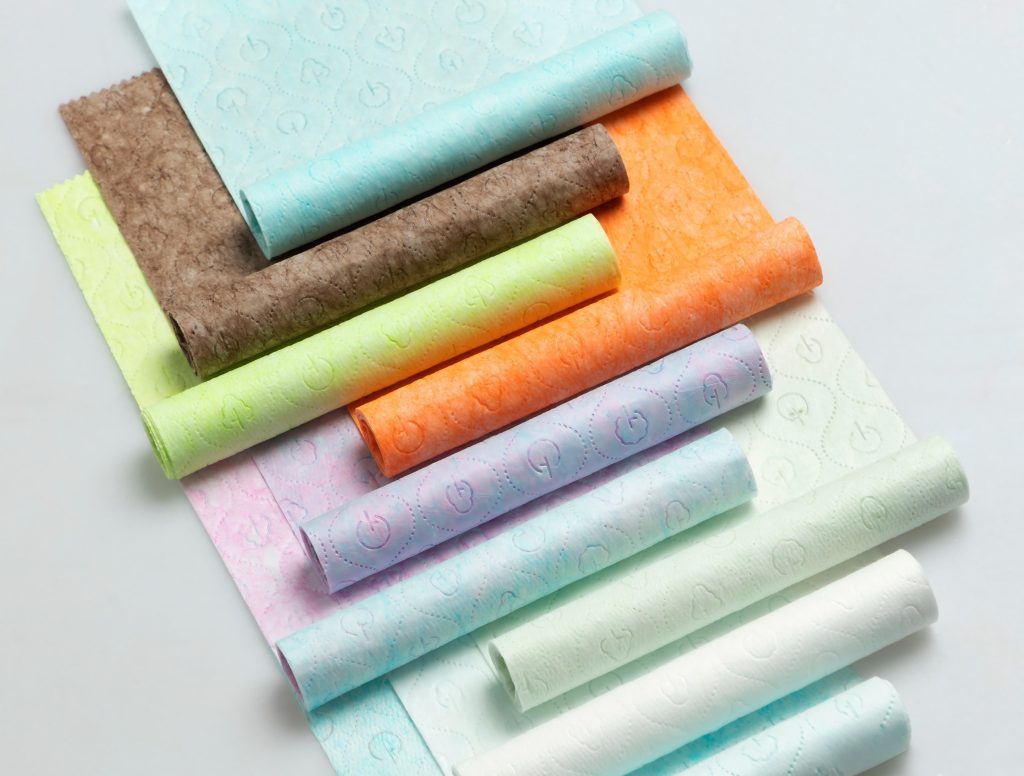
VELORIA Nonwoven supports opportunities for material customization, including:
Customized Surface Patterns
Special web structures and three-dimensional surface patterns can create a more distinctive appearance and tactile feel.
Depending on the selected design and technical feasibility, these patterns may help a product stand apart from conventional flat substrates.
Color Customization
The material can be developed in different colors, including options using fiber coloration during production.
Color selection and production feasibility should be confirmed according to the required shade, material specification, order quantity and manufacturing conditions.
Different Material Structures
Manufacturers can explore different basis weights and structural designs to meet specific product requirements.
These customization options may be relevant to premium personal care wipes, differentiated facial wipes, household cleaning wipes and other products where material appearance and touch contribute to the product concept.
Customization requirements should be discussed during development to confirm technical feasibility, minimum order quantities, lead times and commercial conditions.
7. Potential Applications of VELORIA Nonwoven
VELORIA Nonwoven is designed primarily as a substrate option for wet wipes and related wiping products.
Potential applications include:
Baby Wet Wipes
For baby wipe development where softness, a fuller feel and low-linting performance are important considerations.
Personal Care Wipes
For facial cleansing wipes, makeup-removal wipes and other personal care products requiring a differentiated surface feel.
Premium Wet Wipes
For brands seeking to develop a more distinctive wiping experience through material structure, texture and appearance.
Household Cleaning Wipes
For selected cleaning applications where substrate structure, liquid management and wiping performance need to be evaluated together.
Customized Wet Wipes
For product developers exploring different colors, basis weights and surface patterns.
Frequently Asked Questions
What is wood pulp nonwoven for wet wipes?
Wood pulp nonwoven for wet wipes is a nonwoven substrate that incorporates wood pulp fibers into a web structure. Depending on the manufacturing process, it may be combined with other fibers to achieve specific characteristics. VELORIA Nonwoven uses a dry-laid air-forming process to combine wood pulp and PP fibers.
Is VELORIA Nonwoven an alternative to spunlace nonwoven?
VELORIA Nonwoven can be evaluated as an alternative substrate for selected wet wipe applications. Suitability depends on the required softness, strength, linting, liquid management, converting performance and cost targets. Comparative testing is recommended before replacing an existing spunlace substrate.
Can VELORIA Nonwoven reduce the cost of wet wipes?
It may offer opportunities to reduce total cost through lower substrate consumption or optimized lotion loading in suitable applications. Any savings depend on the finished-product specification and must be confirmed through trials and a complete cost-per-wipe analysis.
Does VELORIA Nonwoven release less lint during wet wiping?
In a supplier-reported comparison at 70 gsm, VELORIA Nonwoven released 9 particles during the specified wet-wiping test, compared with 80 for the reference material. The reported result represents approximately 89% fewer particles under those test conditions. Actual results depend on the material specification and test method.
Can VELORIA Nonwoven be customized?
The material is designed to support different basis weights, colors and surface patterns. Specific customization options, technical feasibility, minimum order quantities and lead times should be confirmed for each project.
Is VELORIA Nonwoven biodegradable?
VELORIA Nonwoven contains both wood pulp and polypropylene fibers. The presence of wood pulp does not mean that the complete composite material is biodegradable or compostable. Any environmental claim should be supported by appropriate testing and certification for the finished material.
How can I request samples of VELORIA Nonwoven?
Contact CHINVISION HYGIENE PRODUCT with your intended application, current substrate, target basis weight and performance requirements. Our team can discuss sample availability and the appropriate evaluation process for your project.